Last updated: June 2025
The best time to trim and prune most trees in San Diego is late winter, from February through March, before spring growth begins. Native California oaks are an exception — pruning those in dry summer months rather than wet seasons may reduce the risk of pathogen entry through fresh wounds. For any tree trimming work, aim to keep cuts to no more than 25% of the live canopy in a single season as a general guideline (a threshold established in ISA pruning guidelines), use the three-cut technique for branches over 1.5 inches, and hire a licensed arborist for trees near structures or power lines.
San Diego’s dry summers, coastal salt air, and fire-season wind loads stress established trees constantly. A poorly timed cut or bad technique on a mature eucalyptus in Ocean Beach or an avocado in Fallbrook doesn’t just scar the bark. It invites fungal disease, destabilizes the tree’s structure, and turns a shaded feature into a fire-season liability. Getting timing and technique right is practical risk management, not fussy gardening.
When and How to Trim and Prune Trees in San Diego
Late February through March is the primary pruning window for most San Diego trees. This late-winter window catches trees just before their spring growth flush, when wounds heal fastest and pests are least active. San Diego’s mild winters mean deciduous trees may not be fully dormant by January, so waiting until mid-February gives a cleaner read on which branches are truly dead.
San Diego’s Mediterranean climate shifts the standard pruning calendar in two key ways. First, summer drought stress makes heavy pruning in July or August genuinely damaging — a stressed tree can’t seal wounds efficiently, turning exposed cuts into entry points for borers and fungal pathogens. Second, the coastal salt air (especially in La Jolla, Coronado, and Point Loma) accelerates tip dieback that looks like disease but is really salt burn. Removing dead tips in late winter is right; doing it mid-summer is not.
Species timing varies enough to matter:
- Eucalyptus: Prune in late winter to early spring. Avoid cutting during the hottest, driest summer weeks — their resin flow drops under drought stress and wounds stay open longer.
- Citrus and avocado: Prune lightly after the harvest window (typically late winter into early spring) to protect fruit production. Heavy pruning in fall risks cold damage to fresh cuts — San Diego’s inland valleys experience higher frost risk than coastal zones.
- Native California oaks (coast live oak, Engelmann oak): Pruning in dry summer months rather than wet seasons may reduce the risk of pathogen entry through fresh wounds, consistent with information from the Sudden Oak Death information network, which describes how Phytophthora ramorum affects California oaks. Verify current oak pruning guidance with UC Cooperative Extension or your local fire authority before scheduling work.
- Palo verde and desert willow: Minimal pruning needed. A light structural cut in early spring is all most drought-tolerant species require.

What You’ll Need Before You Start
The right tools prevent as much damage as the wrong cuts do. Gather these before touching any branch:
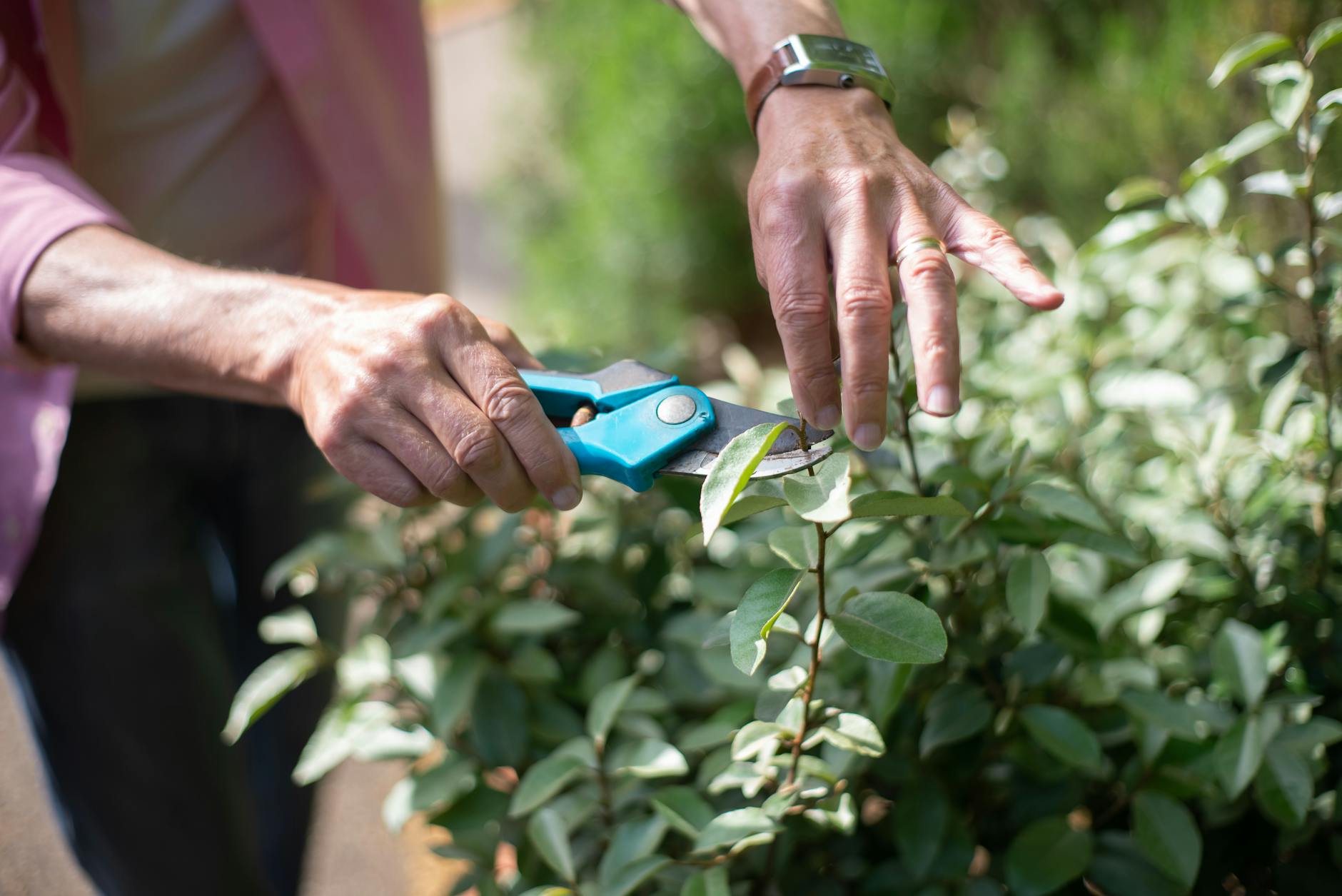
- Hand pruners (bypass style): For stems and branches up to ¾ inch diameter.
- Loppers: For branches ¾ inch to 1½ inches in diameter.
- Pruning saw: For anything over 1½ inches — this is where the three-cut technique becomes necessary.
- Pole pruner: Extends your reach to 10–12 feet without a ladder, useful for lower canopy work on medium trees.
- Safety glasses and gloves: Non-negotiable. Falling debris from overhead cuts causes more eye injuries than most people expect.
- Diluted bleach solution (1 part bleach to 9 parts water): Wipe cutting blades between trees to avoid spreading fungal spores or bacterial pathogens, especially relevant when working through multiple citrus trees where citrus disease vectors remain a potential concern in Southern California.
A standard six-foot step ladder is fine for low, stable canopy work. The moment you’re reaching overhead at full extension or placing the ladder on uneven ground near a trunk, you’ve exceeded the safe operating envelope. At that point, hire a professional with rigging equipment — not because of rules, but because falling saws and falling people don’t forgive bad physics.
Step-by-Step: How to Prune a Tree Safely
Follow these steps in order. Skipping the assessment phase and going straight to cutting is the most common DIY mistake.
- Identify dead, diseased, or crossing branches first. Walk the entire tree before cutting anything. Dead branches are dry, brittle, and lack green tissue when you scratch the bark. Crossing branches rub against each other, creating open wounds. Mark your targets with flagging tape if the tree is large.
- Use the three-cut technique for limbs thicker than 1.5 inches. The three-cut technique, documented in ISA pruning guidelines, helps prevent bark tearing: First cut (undercut) — saw one-third of the way up through the underside of the limb, about 12 inches from the trunk. Second cut (top cut) — saw down from above, about 1 inch further out from the undercut, until the limb drops. Third cut (final cut) — remove the remaining stub with a clean cut just outside the branch collar.
- Cut just outside the branch collar; avoid flush-cutting where possible. The branch collar is the slightly swollen ring of tissue at the base of a branch where it meets the trunk. Cutting flush with the trunk removes this tissue and opens a large wound that may not seal properly. Cutting just beyond the collar allows the tree to compartmentalize the wound naturally — a standard established by the International Society of Arboriculture. As a general guideline, flush-cutting is best avoided on all but the smallest, thinnest stems.
- Aim to remove no more than 25% of the live canopy in a single season as a general guideline. Per ISA pruning standards, exceeding this threshold typically stresses the tree, reduces its capacity to photosynthesize, and — in San Diego’s dry summers — cuts into its drought tolerance. A heavily pruned tree in spring will be fighting to recover when July heat arrives. Spread significant structural work over two or three seasons where possible. In some cases — such as hazard removal — a professional arborist may determine that more removal is necessary; always defer to a qualified expert for trees with structural concerns.
- Clean up debris and dispose of it properly under San Diego County fire-season rules. Green waste from pruning can be composted or chipped, but piles of dry brush left on-site in the hills east of Interstate 15 become fuel. San Diego County’s fire-season chipping programs, available through local fire safe councils, provide free or low-cost debris reduction. Check with your local fire authority for current availability. Avoid leaving cut eucalyptus limbs in piles — they dry quickly and are considered a high fire-risk fuel source.
San Diego-Specific Timing by Season
Timing your pruning to San Diego’s actual seasons — not the generic USDA calendar — is where local knowledge pays dividends.
- Late winter (February–March): The primary window for most deciduous and native species. Wounds heal quickly, pests are less active, and you can clearly see branch structure before foliage returns.
- Spring flush (April–May): Light shaping after bloom for flowering trees like jacaranda. Don’t do structural work during active growth — you’ll remove the energy the tree invested in new leaves.
- Summer (June–September): Avoid heavy cuts on water-stressed trees. Emergency hazard removal is always justified regardless of season, but elective structural pruning on a eucalyptus or avocado in August invites problems. Native oaks may be a better candidate for pruning during dry summer months to reduce pathogen entry risk through fresh wounds — verify with UC Cooperative Extension or your local fire authority.
- Fall (October–November): Light clearance for fire-season defensible space compliance. Remove dead branches and reduce canopy fuel load where required, but save major structural work for late winter.
Pruning Drought-Tolerant and Native Trees
Drought-tolerant and native species follow different rules than the thirsty ornamentals many San Diego yards inherited from wetter-climate landscaping.
Native California oaks — coast live oak, Engelmann oak, and California black oak — may benefit from pruning in dry summer months rather than wet seasons to reduce pathogen entry risk through fresh wounds, consistent with information from the Sudden Oak Death information network, which describes how Phytophthora ramorum affects California oaks. East County homeowners in areas like Ramona and Alpine, where live oaks are common in residential yards, should verify current oak pruning guidance with UC Cooperative Extension or their local fire authority before scheduling any cutting.
Palo verde, desert willow, and other drought-tolerant species popular in San Diego’s water-wise redesigns need minimal pruning. A light structural cut in early spring removes crossing or rubbing branches — typically all that’s needed for the first five to seven years. Over-pruning removes the canopy mass that shades root zones, the opposite of what they need in a dry climate.
Citrus and avocado require the most timing precision. For citrus, prune lightly after harvest to shape and remove deadwood, but avoid hard cuts in fall when San Diego’s inland valleys (El Cajon, Santee) experience higher frost risk than coastal zones. For avocados, prune after fruit set is complete and before summer heat arrives, typically March through April in San Diego’s mild coastal zones.
DIY vs. Hiring a Professional: Honest Assessment
DIY tree pruning is reasonable for trees under 15 feet tall with no overhead utility lines, no limbs hanging over structures, and no signs of disease or structural failure. A young citrus tree in a Chula Vista backyard or a newly planted palo verde in a Clairemont side yard are appropriate DIY projects with the right tools and technique.
Hire a licensed professional when:
- The tree exceeds 15 feet or requires climbing or aerial lift equipment
- Any limb is within striking distance of a roof, fence, or utility line
- You see cracks in the trunk, significant lean, or root zone heaving
- You suspect disease and need a diagnosis, not just removal
- The tree may be a protected species under local ordinance — rules vary by San Diego neighborhood and should be verified with your local building or planning authority before removing any tree
When hiring, look for two credentials: an ISA Certified Arborist, which signals that the individual has passed the International Society of Arboriculture’s professional exam, and a California C-27 landscape contractor license for any company performing the work. Verify the C-27 license directly at CSLB.ca.gov before signing anything — license lookup is free and takes under two minutes.

Tree Trimming Costs in San Diego: What to Expect
Typical costs reported by San Diego tree services generally fall into these ranges: small trees (under 25 feet) typically cost $150–$400; medium trees (25–50 feet) typically cost $400–$900; large trees over 50 feet generally start around $900 and can exceed $1,800 for mature eucalyptus or Canary Island date palms with difficult access. These are regional market ranges observed in local quotes and may vary based on current market conditions and specific site conditions.
| Tree Size | Typical Height | San Diego Cost Range | Main Cost Drivers |
|---|---|---|---|
| Small | Under 25 ft | $150–$400 | Access, debris haul-away |
| Medium | 25–50 ft | $400–$900 | Height, trunk diameter, rigging |
| Large | 50 ft+ | $900–$1,800+ | Equipment, crew size, access difficulty |
Quotes climb toward the top end when trunk diameter exceeds 18 inches, the backyard has no gate access for a chipper truck, terrain is steep (common in Tierrasanta and Scripps Ranch), or debris haul-away is needed. Always ask whether debris removal is included — some competitive quotes exclude it entirely.
Watch for red flags: bids significantly below the range with no explanation, contractors who can’t provide a license number on the spot, and pressure to “top” the tree as a cost-saving measure.
Common Mistakes to Avoid
The most preventable damage in San Diego yards comes from improper topping — cutting all major limbs back to stubs to reduce height quickly. Topping destroys structural integrity, triggers weak, fast-growing epicormic sprouts that are more hazardous than the original canopy, and is actively discouraged by San Diego County and the ISA. It also voids most tree service warranties.
Lion-tailing — stripping interior branches and leaving foliage only at branch tips — creates a wind-sail effect. In Santa Ana wind events, lion-tailed trees flex under load, and the added leverage at branch tips dramatically increases failure risk. This is a structural problem, not just an aesthetic one.
Cal Fire’s defensible space requirements vary significantly by fire-hazard severity zone, and clearance distances in high-hazard zones can reach 100 feet or more in some areas — though exact distances depend on your specific zone classification. Much of San Diego’s East County, Rancho Bernardo, and hillside neighborhoods fall into high-hazard zones. For trees, this primarily means removing dead branches, reducing canopy continuity so fire can’t ladder from ground-level vegetation to tree crowns, and keeping fuel loads manageable. Verify your specific zone and current requirements at CalFire.ca.gov or with your local fire authority before pruning for compliance.
Dull blades and contaminated tools spread disease more than most homeowners realize. A pruning saw used on a diseased fruitwood tree and then immediately used on healthy citrus is a direct inoculation pathway. Wipe blades with diluted bleach between trees — it takes 30 seconds and can save a $400 tree.
Vetting and Hiring a Tree Service in San Diego
Verify any tree service’s C-27 contractor license at CSLB.ca.gov before the first conversation goes further. The license lookup is free. Enter the company name or license number — the board will show you whether the license is active, what classifications it covers, and whether any disciplinary actions are on record.
Before signing, request two documents: a certificate of general liability insurance and a workers’ compensation certificate. Tree work is high-risk. An uninsured crew member injured on your property creates a liability exposure that your homeowner’s policy may not cover.
Get at least two written quotes, and make sure each specifies what’s included in debris removal. “Cutting and cleanup” can mean anything from hauling everything away to leaving chips at the curb. When reviewing contractor reviews online, look specifically for mentions of ISA Certified Arborist credentials and photos of completed San Diego jobs — not stock images. A contractor who posts photos of actual local trees (avocados, eucalyptus, coastal oaks) with location tags is showing real local work.
Frequently Asked Questions
When is the best time to trim trees in San Diego?
Late winter — February through March — is the best window for most San Diego trees. This timing catches trees before the spring growth flush, when wounds heal fastest and pest pressure is lowest. Native California oaks may benefit from pruning in dry summer months to reduce the risk of pathogen entry through fresh wounds — verify current oak pruning guidance with UC Cooperative Extension or your local fire authority. Heavy cuts during San Diego’s summer drought stress should be avoided for all other species — if a limb is a hazard, remove it whenever needed, but elective structural pruning in August is hard on water-stressed trees.
How much does tree trimming cost in San Diego?
San Diego tree service quotes typically fall into these ranges: small trees $150–$400, medium trees $400–$900, and large trees $900–$1,800 or more. These are regional market ranges observed in local quotes and may vary. Costs vary based on tree height, trunk diameter, access for equipment (a locked backyard gate adds cost), and whether debris haul-away is included in the quote. Always clarify what “cleanup” means before signing — some competitive bids exclude debris removal entirely.
Can I trim my own trees in San Diego, or do I need a professional?
DIY pruning is reasonable for small trees under 15 feet that are clear of structures, fences, and utility lines. Use proper tools and the three-cut technique for any branch thicker than 1.5 inches. For taller trees, any limb over a roof or near power lines, suspected disease, or visible structural damage like trunk cracks, hiring an ISA Certified Arborist or a C-27 licensed contractor is the safer choice. Height and hazard limbs aren’t just physically dangerous — improper removal of a protected tree species without the right permits may carry penalties under local ordinances, which vary by neighborhood. Verify requirements with your local building or planning authority.
What is the 25% pruning rule and why does it matter?
The 25% guideline, established in ISA pruning standards, recommends against removing more than 25% of a tree’s live canopy in a single growing season as a general best practice. Doing so typically stresses the tree, weakens its structure, and — in San Diego’s dry climate — reduces the tree’s ability to tolerate summer drought. A heavily pruned tree has fewer leaves to power photosynthesis and less stored energy to survive heat stress. Spread major structural correction over two or three seasons where possible; a professional arborist can advise if your tree’s specific conditions warrant a different approach.
Do San Diego fire-season rules affect how I trim my trees?
Yes. Cal Fire’s defensible space requirements vary by fire-hazard severity zone, and clearance distances in high-hazard areas can reach 100 feet or more in some locations — exact distances depend on your specific zone classification. A significant portion of San Diego County, including East County communities, hillside neighborhoods in Rancho Bernardo, and areas near open space preserves, falls into high-hazard zones. For trees, this primarily means removing dead and dying branches, reducing canopy continuity so fire can’t climb from ground fuel to tree crowns, and keeping debris cleared. Rules vary by zone and are updated periodically — verify your specific requirements at CalFire.ca.gov or contact your local fire authority before pruning specifically for compliance.
Next Steps for Your Trees
Late February is closer than it feels. If you have established trees — coast live oaks in a canyon-adjacent yard, mature eucalyptus near the house, aging citrus in a side yard — now is the time to walk the property, identify problem branches, and plan the season’s work. Small trees you can reach safely from the ground are solid DIY projects. Anything requiring a ladder at full extension, or any limb within 10 feet of a structure or utility line, belongs to a professional.
If you’re uncertain whether your tree is a hazard or just needs a trim, a licensed arborist can tell you in a single site visit. A free consultation often costs far less than the liability of guessing wrong. Connect with a licensed San Diego tree service to get eyes on the problem before the Santa Ana winds arrive.
Disclaimer: This article is for general informational purposes only and does not constitute legal, financial, or professional advice. Laws and regulations vary by location and change over time. We make no guarantees about accuracy or completeness and accept no liability for actions taken based on this content. Always verify the details that apply to your situation and consult a qualified professional before acting.