
Last updated: July 2025
Pest Control Near Me: Your Guide to San Diego Local Services
To find reliable pest control in San Diego, verify any contractor’s license at pestboard.ca.gov, get at least two itemized written quotes, and confirm their insurance before work begins. Catching termites early — mud tubes in a La Jolla crawlspace or Argentine ants in an East County kitchen — puts you ahead of most homeowners and gives you options for cost-effective treatment.
Whether you’ve spotted mud tubes along a foundation wall in Santee or found Argentine ants marching across an Ocean Beach kitchen counter, this guide walks you through identifying what you’re dealing with, understanding your treatment options, and hiring a vetted, licensed San Diego exterminator without overpaying or getting scammed.
Common Pests San Diego Homeowners Actually Deal With
San Diego’s pest landscape follows geography. The region’s mild, year-round Mediterranean climate eliminates any true pest off-season — pest pressure that slows in colder regions remains consistent here throughout all 12 months, making ongoing prevention and recurring service plans practical for most San Diego homeowners. Every decision about when to call a licensed contractor, or whether quarterly service beats a one-time treatment, hinges on that reality.
Termites: San Diego has two distinct termite species with very different behaviors. Drywood termites live inside wood without soil contact and spread through used furniture and structural lumber. The UC Statewide IPM Program (ipm.ucanr.edu) documents drywood termites as common in coastal California settings, and they are frequently reported in coastal neighborhoods like La Jolla, Coronado, and Ocean Beach, where older wood-frame construction and moisture-laden air create favorable conditions. Subterranean termites build underground colonies and enter structures through mud tubes along foundation walls and slab edges; they are a dominant concern in inland and East County neighborhoods like El Cajon, Santee, and Escondido, where soil conditions support underground colony foraging. This distinction matters: drywood infestations sometimes yield to room-by-room treatment, but subterranean colonies typically require soil treatment around the entire perimeter.
Argentine ants: The UC Statewide IPM Program (ipm.ucanr.edu) identifies Argentine ants as the most commonly reported household ant species in Southern California. They form supercolonies documented to extend across multiple properties — treatment on one home can redirect colony pressure toward untreated neighbors. Coastal and inland communities both deal with them; intensity varies by moisture levels and irrigation patterns.
Rodents, cockroaches, and spiders: Rodent activity tends to be higher in neighborhoods near open space, canyon land, and mature vegetation — areas like Santee and Escondido that back onto undeveloped parcels. Cockroach infestations concentrate in homes with moisture and food sources. Widow spiders and other species occur throughout San Diego County. Keeping clutter off fences and sheds and trimming vegetation from the roofline reduces harborage significantly.
Neighborhood-Specific Pest Patterns Across San Diego
Where you live shapes what you’re likely to encounter. The patterns described here are consistent with guidance from the UC Statewide IPM Program (ipm.ucanr.edu) and established San Diego market knowledge; your specific property conditions may differ, and a licensed inspection is the most reliable way to assess your individual situation.
Coastal areas (La Jolla, Coronado, Ocean Beach): Salt air and coastal humidity accelerate wood deterioration on fascia boards, window frames, and eaves — conditions consistent with drywood termite pressure documented in California coastal settings by UC IPM. Homes here benefit from more frequent termite inspections than inland counterparts and need consistent exterior wood maintenance to reduce vulnerabilities.
Inland and East County (El Cajon, Santee, Escondido): Soil conditions and the drier climate in these areas are consistent with subterranean termite foraging patterns documented for Southern California by UC IPM. Rodent pressure tends to increase near open space or canyon land, and homeowners in Santee and Escondido backing onto undeveloped parcels commonly report higher rodent activity.
North County and newer developments: Construction-disturbed soil in areas like Rancho Bernardo and Carmel Valley displaces existing pest colonies, pushing them toward established homes. New construction doesn’t guarantee pest protection — it can temporarily intensify pressure on adjacent properties.
Year-round pressure: San Diego’s mild Mediterranean climate means there is no killing frost to interrupt pest cycles. Pest activity that slows significantly in colder climates remains consistent year-round in San Diego, making proactive prevention and recurring service plans practical across all neighborhoods.
Early Identification: How to Spot a Problem Before It Grows
Most pest problems leave physical evidence before becoming serious. Learning to read those signs gives you time to act before treatment costs escalate.
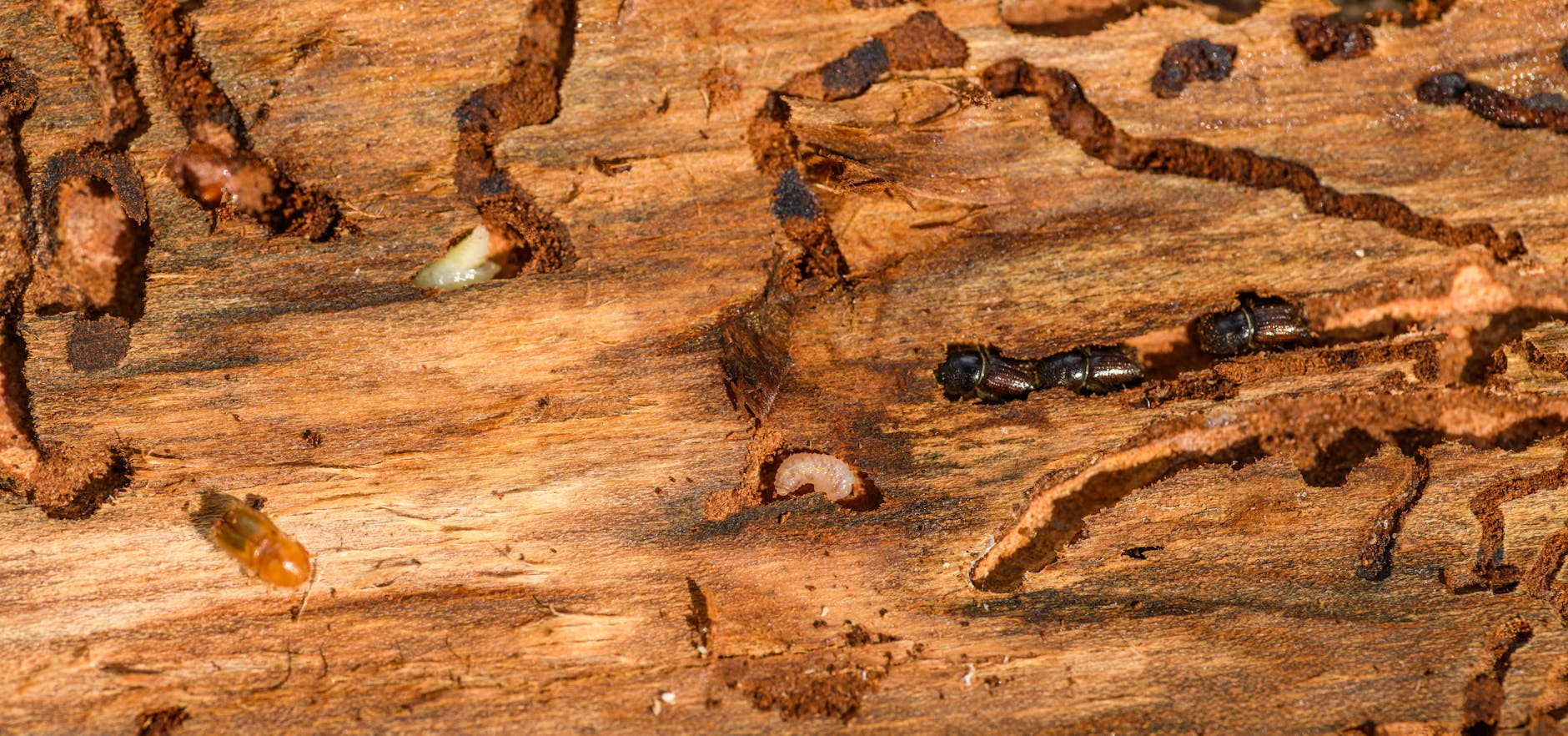
- Termites: Subterranean termites build pencil-width mud tubes along foundation walls, slab edges, and in crawlspaces. Drywood termites leave small piles of pellet-shaped frass (excrement) near infested wood, often below window sills or door frames.
- Rodents: Dark, capsule-shaped droppings along baseboards, gnaw marks on food packaging, and greasy rub marks on walls near entry points are the primary indicators.
- Cockroaches: Pepper-like droppings in cabinet corners, a faint musty odor, and shed skins near water sources typically precede a visible roach sighting.
- Bed bugs: Rust-colored spots on mattress seams, small white eggs in fabric folds, and unexplained skin welts in the morning are the key signs.
Many licensed San Diego exterminators offer free initial inspections — a visual walk-through, not a comprehensive structural assessment. For suspected termite damage, a wood-destroying organism (WDO) report from a Branch 3–licensed contractor provides thorough findings and serves as required documentation in real estate transactions. When a free inspection produces a repair estimate that feels outsized, getting a second opinion from a separate licensed contractor is reasonable.
DIY Spot Treatment vs. Calling a Licensed Professional
Some pest situations are manageable without a contractor. Others legally require one.
Retail ant baits, glue traps, and door sweep replacements work for early-stage ant trails or a single-room rodent entry point. Sealing gaps around pipes, weatherstripping door thresholds, and trimming vegetation from the roofline are practical prevention steps any homeowner can take. Minor ant or spider issues may be manageable with retail products and physical exclusion — no licensed professional required.
Structural termite treatment is different. In California, any chemical treatment targeting wood-destroying organisms requires a contractor licensed by the California Structural Pest Control Board. Unlicensed operators using restricted pesticides expose your household to health risks and may void certain homeowner insurance protections. Beyond legality, subterranean termite treatment requires soil injection or bait station installation at precise intervals around the foundation — doing it incorrectly simply doesn’t work.
Without a hard winter to slow colony growth, an untreated subterranean termite colony in San Diego can continue expanding its foraging range through spring and summer. Schedule a licensed inspection when you first notice mud tubes — not after seeking further confirmation — and you’ve made the lower-cost decision.
Realistic Pest Control Costs in San Diego
Pest control pricing in San Diego varies based on home size, pest type, treatment method, and neighborhood. Always get at least two itemized written quotes before committing — costs vary significantly by contractor, property size, and current conditions. The ranges below are general local estimates based on San Diego market conditions; your actual quote may differ.
| Treatment Type | Typical Range (San Diego Market) | Scope | Displacement Required? | Ongoing Coverage? |
|---|---|---|---|---|
| One-time general pest treatment | Roughly $150–$350 (estimate; varies by pest type and home size) | Single pest type, single visit | No | No |
| Quarterly pest control service | Roughly $100–$200 per visit (estimate; varies by home size and pest type) | Broad coverage, recurring prevention | No | Yes (re-treatment typically included) |
| Localized termite spot treatment | Varies; request written quotes from licensed contractors | Targeted wood members only | No | Sometimes (depends on contract) |
| Whole-house termite tenting (fumigation) | Roughly $1,200–$3,500+ depending on home size (estimate) | Entire structure, all drywood termites | Yes (typically 2–3 nights) | Limited (re-treatment warranty varies) |
| Rodent exclusion | Roughly $300–$700 (estimate; varies by entry points and home size) | Sealing entry points, trapping | No | Sometimes (depends on contract) |
| Subterranean termite perimeter treatment | Varies; request written quotes from licensed contractors | Soil/foundation perimeter | No | Often (annual renewal) |
Home size drives cost differences most consistently. Treatment method matters significantly: localized drywood spot treatment costs less if contained to one structural member, but distributed damage usually requires tenting for more complete eradication. Always confirm specific pricing in writing with itemized quotes from at least two licensed contractors.
Contractor Vetting Checklist: How to Hire a Licensed San Diego Exterminator
Hiring an unlicensed operator carries real risk. Without licensing, there’s no regulatory body to file a complaint with and no continuing education requirement keeping the contractor current.
- Verify the license at pestboard.ca.gov. Enter the company or individual name at the California Structural Pest Control Board license lookup. Confirm the license is active and which Branch it covers (explained in the next section).
- Request proof of insurance before work begins. Ask for a certificate of insurance covering general liability. Many licensed contractors also carry workers’ compensation insurance. A legitimate contractor will provide documentation without hesitation.
- Ask specifically what treatment method they propose and why. A contractor who recommends whole-house tenting for a single localized drywood infestation without explaining the rationale deserves a second opinion. The method should match the evidence from the inspection.
- Request the service agreement in writing before signing. Verbal guarantees aren’t enforceable. Get the scope, treatment method, re-treatment terms, and any warranty in the contract itself.
- Read Google and Yelp reviews for patterns. One negative review about scheduling is noise. Three reviews mentioning “bait-and-switch pricing after the inspection” signal a concern. How the company responds to negative reviews tells you as much as the complaint itself.
Red flags: Unusually low bids with vague scope, pressure to sign on the same day as the inspection, requests for full upfront payment, and contractors who can’t provide a license number on request are serious warnings.
California Structural Pest Control Board Licensing: Branch Categories and Certification Requirements
California’s Structural Pest Control Board issues licenses in three Branch categories. The distinction matters when hiring. Verify current categories and requirements directly at pestboard.ca.gov — the Board may update its categories over time.
- Branch 1: Fumigation — authorizes use of structural fumigants, including tent fumigation for drywood termites. This is the most restrictive category and requires additional certification beyond Branch 2 or 3.
- Branch 2: General pest control — covers ants, cockroaches, rodents, spiders, fleas, and other household pests not classified as wood-destroying organisms.
- Branch 3: Wood-destroying organisms (WDO) — covers inspection and treatment of termites, wood-boring beetles, and wood-decaying fungi. This license is required for issuing official WDO reports used in real estate transactions.
A contractor performing termite tenting must hold Branch 1. A contractor issuing a WDO report for a San Diego home sale must hold Branch 3. Many companies carry multiple branches. Beyond state licensing, look for field technicians holding a Qualified Applicator Certificate (QAC) or Qualified Applicator License (QAL), which indicate additional training in pesticide application. Hiring an unlicensed operator may void certain homeowner insurance protections — verify this with your insurer before authorizing any structural pest work.
Quarterly Service Plans, Warranties, and Guarantees
A quarterly pest control plan involves four scheduled visits per year with re-treatment coverage between scheduled visits if pests return. That re-treatment provision separates a plan from four separate one-time treatments. Confirm the terms carefully, because they vary significantly between contractors.
Termite bonds are a separate category, typically sold by Branch 3–licensed contractors. A termite bond commits the contractor to treating any new termite activity during the contract period and includes annual inspections. For San Diego homebuyers, the wood-destroying organism (WDO) report is a standard disclosure document identifying active infestations, prior damage, and conditions conducive to future infestation. Confirm what sections or findings are included in any WDO report with the licensed contractor issuing it.
Re-treatment guarantees vary widely. Before signing, confirm in writing which specific pests are covered, how many re-treatment visits are included, the coverage period, and any conditions that void the guarantee — such as missing a scheduled service. Clarify whether the guarantee transfers if you sell the home. Get all warranty terms in the contract itself, not just in a verbal explanation.
Upgrade to quarterly service if you’ve had two or more separate ant or rodent events in 12 months, or if your home adjoins canyon land in Santee or Escondido. Quarterly service provides better ongoing suppression than annual treatment alone given San Diego’s year-round pest pressure.
Prevention and Seasonal Maintenance for San Diego Homes
Year-round prevention is more effective and less expensive than reactive treatment. Because San Diego doesn’t have a killing frost, prevention habits must be consistent rather than seasonal. Spring and fall remain the highest-leverage times to address entry points and moisture issues.
For coastal neighborhoods, wood maintenance is critical. Paint and caulk on exterior wood surfaces — fascia boards, window casings, soffits — need more frequent attention in Coronado and Ocean Beach than in inland areas. Inspect and touch up exterior wood annually. Sound, well-maintained wood gives drywood termites fewer entry points.
For subterranean termite prevention in East County, drainage is key. Subterranean termites seek moisture. Ensure irrigation spray doesn’t contact the foundation, gutters drain away from the structure, and soil grades away from the slab. Removing wood debris, firewood piles, and landscape timbers from foundation contact eliminates direct foraging bridges.
Across all neighborhoods, reducing clutter in garages, attics, and crawlspaces cuts harborage for rodents and spiders. Keep vegetation trimmed back at least 18 inches from the roofline — a common entry route for pests seeking attic access.
Before-and-After: What Professional Treatment Actually Looks Like
A realistic picture of the process sets accurate expectations and reduces uncertainty.
A homeowner in Santee notices pencil-width mud tubes on the exterior stem wall of their 1980s ranch home. They call a licensed exterminator holding Branch 2 and Branch 3 licenses and schedule an inspection within 48 hours.
During the inspection, the technician confirms active subterranean termite activity along the south-facing foundation wall and a secondary entry point through an expansion joint in the slab. The inspection takes about 45 minutes. The contractor provides a written proposal within 24 hours, recommending liquid soil treatment with a borate application to exposed framing in the crawlspace — not whole-house tenting, because the infestation is localized and subterranean termites are not addressed by fumigation the way drywood termites are.
Treatment occurs the following week. A two-person crew completes the soil injection and borate application in approximately three hours. No displacement is required. The contractor explains the re-treatment window and schedules a 30-day follow-up inspection. At the 30-day check, activity is gone. The homeowner enrolls in an annual monitoring program and has the soil treatment renewed the following spring.
From first call to completed treatment: roughly ten days. The outcome isn’t dramatic visually. What changes is the absence of ongoing damage and the documentation that a licensed professional addressed the problem in a way that can be verified if the home is ever sold.
Frequently Asked Questions
How do I know if I need a licensed exterminator or can handle the pest myself?
Minor ant trails or a single spider encounter are reasonable targets for retail bait products and physical exclusion. Structural pests like termites, wood-boring beetles, or other wood-destroying organisms legally require a contractor licensed by the California Structural Pest Control Board. If you’re seeing mud tubes, frass piles near structural wood, or damage to load-bearing members, call a licensed professional before attempting any treatment. Structural pests treated incorrectly relocate rather than resolve.
How do I verify a pest control company’s license in San Diego?
Go to pestboard.ca.gov and use the license lookup tool. A valid result shows the license number, Branch categories held, expiration date, and whether the license is active or suspended. If a contractor’s license number doesn’t return a valid result, that is a disqualifier. Do this before anyone shows up for an inspection, not after you’ve received a quote.
What’s the difference between a one-time treatment and a quarterly service plan?
A one-time treatment addresses a specific pest at a specific time with no ongoing coverage. A quarterly plan involves four scheduled visits per year, covers a broader range of general household pests, and includes re-treatment between scheduled visits if pests return. In San Diego, where pest pressure is year-round, quarterly plans often provide better long-term value for homes with recurring ant, cockroach, or spider pressure. Typical quarterly service in San Diego runs roughly $100–$200 per visit depending on home size and pest type — these are general local estimates; request written quotes from licensed contractors to compare pricing and coverage for your specific property.
Why are my neighbors getting treated but my home keeps getting ants?
Argentine ant colonies in San Diego can extend across multiple properties. The UC Statewide IPM Program (ipm.ucanr.edu) documents that Argentine ants form large supercolonies — treating one home while neighboring properties remain untreated can redirect colony activity. The most effective response is coordinated neighborhood treatment or enrolling in a recurring quarterly service plan that maintains consistent suppression. A single one-time treatment while neighboring homes have active colonies will show limited lasting results.
What should a pest control warranty or guarantee actually cover?
The answer is entirely in the contract text. Before signing, confirm in writing which specific pests are covered, how many re-treatment visits are included, the coverage period, and any conditions that void the guarantee — such as missing a scheduled service. Termite bonds should state what types of termite activity trigger coverage and whether the contract transfers to a new owner. A reputable licensed San Diego exterminator will explain every term before you sign. If they won’t put it in writing, that’s a red flag.
Making a Confident Decision
Spotting a pest problem early — before mud tubes reach a floor joist or an ant column establishes multiple entry routes — gives you options that reactive treatment doesn’t. Most San Diego homeowners who call a licensed exterminator at the first sign of activity spend less and deal with less disruption than those who wait. The steps in this guide help separate a homeowner who gets a fair deal from one who gets talked into more than they need.
Ready to move forward? Get a free local quote from a vetted, licensed San Diego pest control contractor and find out exactly what’s going on in your home before committing to any treatment plan.
Disclaimer
This article is for general informational purposes only and does not constitute legal, financial, or professional advice. Laws and regulations vary by location and change over time. We make no guarantees about accuracy or completeness and accept no liability for actions taken based on this content. Always verify the details that apply to your situation and consult a qualified professional before acting.