Before winter arrives, insulate all exposed supply lines in unheated spaces, keep indoor heat above 55°F, and protect outdoor hose bibs and irrigation components.
San Diego homeowners in East County and mountain communities face real freeze risk. Ramona, Alpine, and El Cajon commonly experience winter lows of 28–32°F (per the National Weather Service San Diego forecast page), while Julian and Pine Valley see extended hard freezes. Even coastal garages in Encinitas can split an uninsulated copper line on a cold January night.
What You’ll Need Before You Start
Gather these materials before temperatures drop. Installation is quick, but a 9 p.m. hardware store run before a freeze is a problem you can avoid.
- Foam pipe insulation sleeves (pre-slit polyethylene tubes, sold by diameter—measure your pipes before you shop)
- Fiberglass pipe wrap (for irregular shapes or tight corners where foam sleeves won’t sit flush)
- UL-listed self-regulating heat cable (electric pipe cable; self-regulating models adjust output based on pipe temperature and are safer than constant-wattage tape)
- Caulk or weatherstripping (for sealing gaps around pipe penetrations through exterior walls)
- Insulated hose bib covers (foam-lined dome covers; widely available at most hardware stores, generally under $10 each)
- A flashlight (crawl spaces and under-sink cabinets are dark—you need to see what you’re wrapping)
- Contact information for a licensed San Diego plumber—if you discover a pipe that’s already frozen or cracked, stop and call

How Do I Prevent Frozen Pipes in San Diego?
Insulate exposed pipes in garages, crawl spaces, and exterior walls with foam sleeves. Install UL-listed heat tape in unheated areas. Seal gaps near pipe penetrations. Let cold-side faucets drip slowly on nights below 28°F. Disconnect outdoor hoses before any forecast freeze.
The freeze risk is real and local. San Diego East County—Ramona, Alpine, El Cajon—commonly records winter lows in the range of 28–32°F, and mountain communities like Julian and Pine Valley typically experience lower temperatures with extended periods below 32°F (per the National Weather Service San Diego office). Freeze watches and warnings for inland and mountain zones come multiple times each winter. Coastal neighborhoods rarely freeze outdoors, but their unheated garages are different: a garage in Ocean Beach or Coronado can sit at 35°F on a January night while supply lines running through it have no insulation at all.
Copper and CPVC pipes burst when water freezes inside them—expansion exerts force on pipe walls and fittings, especially those weakened by corrosion. Galvanized lines in pre-1970s San Diego homes add corrosion risk on top of freeze risk. Any of these materials, running through an uninsulated exterior wall or unheated crawl space, can split in a single night below 28°F.
Step-by-Step: How to Protect Your Pipes Before a Cold Night
Work through these steps in order. The first tells you where to focus, and each one that follows builds on it.
- Locate all exposed or at-risk pipes. Check three places first: the garage (look along the ceiling and walls for supply lines), under every sink on an exterior wall, and the crawl space if your home has one. Bring a flashlight. Mark or photograph any uninsulated pipe you find—you’re building a work list, not fixing anything yet.
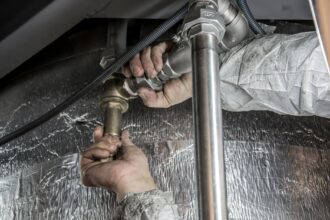
- Wrap foam insulation sleeves around exposed pipes. Pre-slit polyethylene foam sleeves slip over the pipe and close with the adhesive seam. Cut them to length with scissors or a utility knife. On elbows and T-fittings, cut the foam at an angle so it seats flush. Seal every seam and joint with pipe-insulation tape—gaps are where cold gets in.
- Apply UL-listed heat cable on pipes in unheated spaces. Wrap the cable in a spiral along the pipe length, then cover it with foam insulation. Plug only into a GFCI outlet—this is non-negotiable: heat tape plugged into a standard outlet poses both fire and shock risk. Self-regulating cable is the better choice for San Diego’s variable winters—it draws more power when the pipe is cold and backs off when it warms up.
- Seal gaps and cracks near pipe penetrations. Every hole where a supply line passes through an exterior wall is a cold-air channel. Use caulk (paintable acrylic or silicone) for gaps smaller than ¼ inch; use expanding foam for larger voids. Weatherstripping works for gaps around access panels or cabinet backs on exterior walls.
- Let cold-side faucets drip overnight when temperatures drop below 28°F. Focus on faucets fed by pipes running through exterior walls or unheated spaces. Moving water resists freezing—even a slow drip reduces the risk of pressure building inside the line. In San Diego’s drought context, a slow drip (not a stream) is all you need, and the waste is minimal compared to the cost of a burst pipe.
- Open cabinet doors under sinks on exterior walls. This lets the conditioned air inside your home reach the pipes behind the cabinet. It costs nothing and can make a meaningful difference on a cold night, especially in older homes where cabinet backs sit flush against exterior drywall with no insulation behind them.
- Set your thermostat to a minimum of 55°F, even when you’re away. An unoccupied house cools faster than an occupied one. Maintaining interior temperatures at or above 55°F is a standard freeze-prevention measure for unoccupied homes and can help keep pipe temperatures above the freeze threshold. If you’re leaving town during a forecast cold snap, do not turn the heat off entirely—the cost of a burst pipe repair typically far exceeds a few days of heating bills.
San Diego’s Freeze Risk: Which Neighborhoods and Pipe Types Are Most Vulnerable
The highest freeze risk in San Diego County falls in three zones: East County inland valleys, mountain communities, and unheated enclosed spaces in any neighborhood.
East County sees the most residential freeze events. Ramona and Alpine commonly experience winter lows below 30°F, and El Cajon can see similar or lower overnight temperatures (per the National Weather Service San Diego forecast page). Julian and Pine Valley, at higher elevations in San Diego County’s mountain areas, typically see extended hard freezes where temperatures hold below 32°F for 12 hours or more. Homes in these communities with uninsulated garage water heater supply lines or exterior hose bibs are among those most likely to see burst pipes after a cold night.
Coastal neighborhoods like La Jolla and Coronado rarely see outdoor air drop below freezing. But their older housing stock—pre-1960s bungalows with copper lines in uninsulated crawl spaces, or post-war homes with galvanized supply lines—faces a different freeze scenario. The crawl space or garage drops to 35–38°F, and a pipe weakened by corrosion or hard-water scale can split at a temperature most homeowners wouldn’t consider dangerous. Copper and CPVC pipes are more prone to bursting when water freezes, as expansion force cracks fittings and pipe walls, especially those that are thin-walled or show corrosion.
Outdoor irrigation lines and hose bibs deserve their own category. These components are fully exposed to ambient air, often made of thinner-gauge materials, and are frequently left unprotected in San Diego homes. Disconnecting garden hoses before a freeze helps prevent back-freeze damage to the hose bib valve—a failure pattern where water in a connected hose can refreeze and damage the valve, often going undetected until you turn the hose on in spring and water runs inside the wall instead of out the spigot.
Outdoor Pipes and Irrigation Lines: Don’t Overlook These
Outdoor irrigation components and hose bibs are among the most commonly burst pipes after a San Diego freeze, and among the easiest to protect.
Shut off your irrigation controller and drain the lines before any forecast freeze. Most San Diego drip and spray systems have a manual drain valve or can be drained by activating each zone briefly with the water supply off. Once drained, the lines have nothing left to freeze.
Install an insulated hose bib cover on every outdoor spigot. These foam-lined dome covers are widely available at most hardware stores for under $10 each and take under 5 minutes to install: slip them over the bib and secure the drawstring. That’s a low-cost fix for a component that, if it bursts, can send water into your wall cavity for hours before you notice. Disconnect and store garden hoses before you cover the bib—a hose left connected traps water in the bib valve and defeats the cover entirely.
Drip system backflow preventers are especially vulnerable because they protrude from the wall and have no structural protection from wind chill. Wrap them with foam pipe insulation and secure it with tape rated for outdoor use. In mountain communities like Julian or Pine Valley, consider removing and storing backflow preventers indoors for the duration of winter.
What to Do If a Pipe Freezes (Before It Bursts)
If you turn on a faucet and get no water on a cold morning, act immediately. A frozen pipe that hasn’t burst yet gives you a narrow window to prevent major damage.
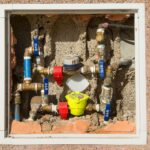
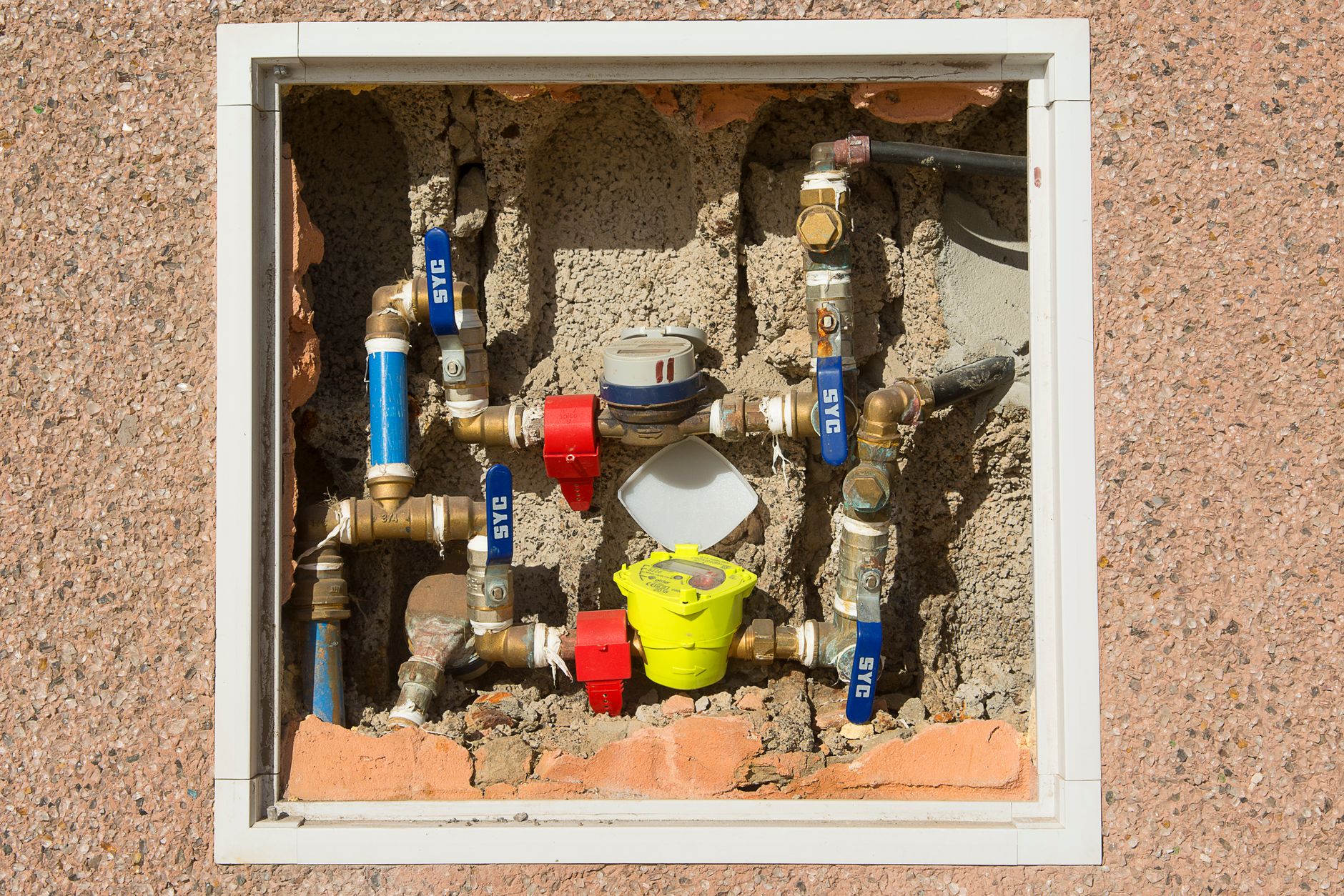
The first signs of a frozen pipe: no water flow from a faucet that normally works, visible frost on an exposed pipe, or a section that looks swollen or discolored. Find your main water shutoff before you do anything else. In most San Diego homes, it’s in one of three locations: inside the water meter box at the curb (look for a concrete or plastic box flush with the sidewalk near the street), on the garage wall on the side closest to the street, or in a utility closet near the water heater. If you don’t know where yours is, find it now, before cold weather arrives.
Safe thawing starts at the faucet end and works back toward the frozen section. Use a hair dryer on its low or medium setting, or a heating pad wrapped around the pipe. Keep the faucet open while you work—as the ice melts, water and steam need somewhere to go. Never use an open flame, propane torch, or lighter to thaw pipes. A torch held near a pipe can ignite surrounding framing, insulation, or wall material, creating serious fire risk. If you spot any visible bulging, cracking, or swelling on a pipe, or if water doesn’t resume within 30 minutes of gentle thawing, stop and call a plumber immediately—a frozen pipe that has already cracked may not leak until it thaws, as the ice can sometimes temporarily seal small cracks.
Common Mistakes to Avoid
These errors turn a manageable cold night into an emergency repair call.
- Using an open flame to thaw pipes. A propane torch held near a pipe can ignite surrounding framing, insulation, or wall material, creating serious fire risk. Use a hair dryer or heating pad only.
- Leaving garden hoses connected overnight before a freeze. Water in a connected hose can back-freeze into the bib valve and potentially damage it. The repair often requires opening the wall. Disconnect every hose before temperatures drop.
- Turning the heat completely off when leaving town in winter. An unoccupied house with no heat can drop below 32°F inside during a prolonged cold snap. Set the thermostat to a minimum of 55°F—it typically costs far less than a burst pipe repair and service call.
- Skipping garage inspection. Many San Diego garages—particularly those in single-family homes—have exposed supply lines running along the ceiling or wall to a utility sink, washing machine, or water heater. These are often the lines that freeze first.
- Waiting for a confirmed freeze forecast to start insulating. Foam sleeve installation takes time, and hardware stores can sell out of pipe insulation fast once a freeze warning posts. Install it in October or November, and it’s done before the first cold snap.
When to Call a Licensed San Diego Plumber
Some frozen-pipe situations require a licensed professional. Know the threshold before you’re standing in a flooded room deciding.
Call a plumber immediately if a pipe has already burst. Shut off the main water supply valve first, then call. Water damage escalates fast—soaked drywall, subfloor damage, and mold risk all compound with time. Don’t wait to see if it “slows down.”
Call if you have a frozen but intact pipe that you cannot safely access or thaw. Pipes inside walls or in deep crawl spaces may require professional tools to locate and thaw safely. A licensed plumber has infrared detection tools and professional-grade thawing equipment suited for confined spaces.
If your home has uninsulated lines in hard-to-reach crawl spaces, a plumber or insulation contractor can assess and insulate them properly in a single visit. Older homes in East County with original galvanized lines are generally worth a professional inspection before winter.
Before you hire anyone, verify that the plumber holds a current California C-36 Plumbing Contractor license through the CSLB. You can search the CSLB database at cslb.ca.gov in seconds using the contractor’s name or license number. In California, plumbing work generally requires a C-36 Plumbing Contractor license when it exceeds certain labor-and-materials thresholds. Licensing requirements vary by jurisdiction and change over time—verify current requirements with CSLB.ca.gov before hiring. Emergency plumbing costs in San Diego vary widely by contractor, scope, and timing—for a detailed breakdown of what to expect, refer to our article on San Diego emergency plumbing repair costs and price ranges.
Frequently Asked Questions
Do pipes actually freeze in San Diego?
Yes. Pipes freeze in San Diego every winter, particularly in East County communities like Ramona, Alpine, and El Cajon, where temperatures commonly drop to 28–32°F overnight. Mountain communities including Julian and Pine Valley typically experience hard freezes that hold below 32°F for extended periods. Even coastal homes face freeze risk in unheated garages, crawl spaces, and exterior wall cavities, where ambient air temperature can drop well below what the outdoor thermometer shows. If your home has any exposed supply lines in an unheated space, they’re at risk regardless of your ZIP code.
What is the lowest temperature at which pipes can freeze?
Pipes can begin freezing at 32°F—the physical freezing point of water—but they’re more likely to burst when temperatures sustain at 20°F or below for several hours. In San Diego’s unheated garages and crawl spaces, pipes are exposed to ambient air with no buffering warmth from the surrounding structure, which means they can reach the freezing point faster than pipes inside conditioned living space. A copper or CPVC line in an uninsulated garage may freeze solid during a single night below 28°F even when the outdoor temperature only briefly touches that mark.
Should I let my faucets drip overnight to prevent frozen pipes?
Yes. Letting cold-side faucets drip slowly overnight is an effective freeze-prevention measure for faucets fed by pipes that run through exterior walls or unheated spaces. Moving water resists freezing because it reduces the chance of ice crystals building up and blocking flow. In San Diego’s drought-conscious context, a slow drip (not a stream) is all you need. Focus on faucets on exterior walls, hose bibs with an interior shutoff you’ve left open, and any faucet in a garage or utility room that lacks insulation on its supply line.
How do I find my main water shutoff in a San Diego home?
The main water shutoff in most San Diego homes is in one of three locations: inside the water meter box at the curb (look for a concrete or plastic box flush with the sidewalk near the street), on the garage wall on the side closest to the street, or in a utility closet near the water heater. Locate yours before cold weather arrives and test that it turns fully—valves that haven’t been operated in years can be stiff or stuck. If yours is inaccessible or doesn’t shut off flow completely, a plumber can replace or repair it as a simple scheduled service call.
How much does emergency pipe burst repair cost in San Diego?
Emergency plumbing costs in San Diego vary widely by contractor, scope, and service timing. Specific costs depend on the location of the damage, accessibility, and whether adjacent materials require repair or replacement. For a detailed breakdown of realistic cost ranges by job type and timing, refer to our article on San Diego emergency plumbing repair costs and price ranges.
Disclaimer
Disclaimer: This article is for general informational purposes only and does not constitute legal, financial, or professional advice. Laws and regulations vary by location and change over time. We make no guarantees about accuracy or completeness and accept no liability for actions taken based on this content. Always verify the details that apply to your situation and consult a qualified professional before acting.
Last updated: June 2026